This is the simplest cycling prosthesis. A rigid tube (pylon) connects the stump directly to a pedal plate or cleat.
- Advantage: simple construction, reliable and efficient.
- Suitable for: recreational cyclists and novice athletes.
Welcome To Amputee Care Center
powered by Spronken


Cycling gives you a feeling of freedom. It is something that many people want to be able to do again after an amputation. The good news is that in most cases, cycling with an arm or leg prosthesis is possible. With the right adjustments and guidance, you can get back on the road safely and comfortably.
At Amputee Care Center (ACC), we help prosthesis wearers achieve that goal every day. Whether you are a top athlete, cycle recreationally with a prosthesis, want to cycle to work or have simple sporting ambitions after a recent amputation: we design cycling prostheses that suit your body, wishes and level.

Contact us by completing the Contact Form or by calling +32 (0)470 500 888. We are at your service.
After an amputation, many people think that cycling is no longer possible. However, this is rarely true. The possibilities mainly depend on:
Some amputees cycle on a “normal” bicycle with minor adjustments. Others opt for a specific bicycle prosthesis or an adapted bicycle, such as a tricycle or hand bike. The basic principle is always the same: safety, comfort and control.
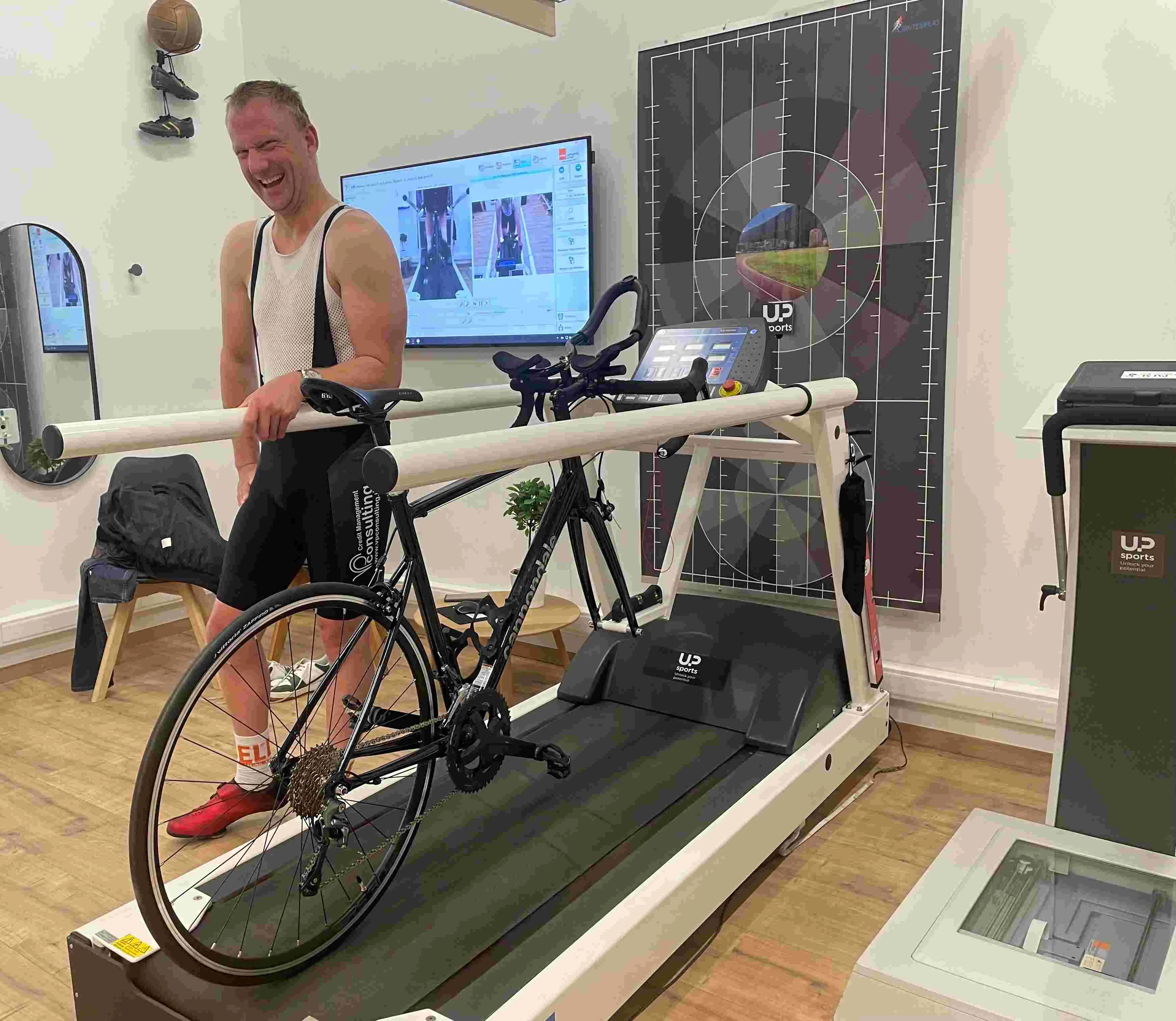
Many people find it daunting to get back on a bike immediately after an amputation. That is perfectly normal. These tips will help you build up slowly:
Slowly but surely, your confidence will grow, and with it, your enjoyment.
The prosthetists at the Amputee Care Centre specialise in custom prostheses. We design and manufacture prostheses and support athletes competing in the Paralympic Games, as well as amateur cyclists and anyone else who wants to cycle. Because cycling is a sport for everyone, including people with amputations.
We make cycling prostheses and support amateurs and top athletes in the discipline of para-cycling in various categories, each with its own specialist approach:

Contact us by completing the Contact Form or by calling +32 (0)470 500 888. We are at your service.
We design and manufacture cycling prostheses for every level. Cycling with a prosthesis requires a combination of comfort, stability and pedalling efficiency. Depending on your level (amateur or top athlete), there are various solutions:
This is the simplest cycling prosthesis. A rigid tube (pylon) connects the stump directly to a pedal plate or cleat.
Here, the pedal contact point is slightly misaligned with the pylon.
For above-knee amputations, an MCK microprocessor knee, such as the Ottobock C-Leg or Ossur Powerknee, is ideal.
In the case of arm amputations, customised prostheses or sports adapters can help with steering, braking and gear shifting.
Simple rigid pylon prosthesis, affordable, comfortable, available with strap pedals or Magped.
Custom socket, ultra-lightweight tube, off-centre attachment, MCK microprocessor knee with cycling mode for thigh prostheses, aerodynamic and always optimised in the Amputee Care Centre gait lab for maximum performance.
In the case of a leg amputation, the amputation level determines what is possible. People with a lower leg amputation can often cycle perfectly well with their normal, everyday prosthesis, possibly with minor adjustments.

The situation is different for above-knee amputations: these often require a special cycling prosthesis, usually a sports cycling prosthesis. Such a prosthesis has:
The aim is to create a natural pedalling motion without the prosthesis shifting or feeling uncomfortable. The bicycle itself can also be adapted: with a lower step-through, a shorter bottom bracket or an adjusted crank length. This ensures that everything, from the prosthesis to the pedals, is perfectly matched.
Denise Schindler (Germany): Paralympic champion and ambassador for para-cycling, she is an inspiring example of a driven top athlete with an amputation.
When it comes to arm amputations, grip and safety are key. A cycling prosthesis allows you to hold the handlebars firmly, but also to let go quickly if necessary, for example in an unexpected traffic situation.
We design hand prostheses with customised couplings for handlebar control, brake and gear systems. These ensure maximum control without overloading the shoulder or torso. The couplings are often 3D-printed and tailored to your bicycle and hand position. This makes it feel not only safe, but also comfortable, even during longer rides.
Morgan Newberry (UK): Uses an arm prosthesis for better steering control during competitions and is an inspiration to many cyclists with an arm amputation.

A cycling prosthesis must not only be functional, but also comfortable. That is why we use ergonomic and shock-absorbing materials at the Amputee Care Center. This is not only pleasant during sporting rides, but also important to prevent muscle and joint strain.
We look not only at the prosthesis, but also at your sitting posture, leg or arm position and pressure distribution while cycling. Small adjustments can make a big difference in comfort and energy consumption.
Prosthesis wearers from Belgium and the United Kingdom often choose the Amputee Care Center (ACC) for their customised cycling prosthesis. The prosthesis centre in Genk specialises in customised prostheses for cycling and paracycling, suitable for both recreational cyclists and top athletes. Advanced materials such as 3D-printed sockets, prepreg or carbon sockets and aluminium and titanium components make your cycling performance a lot easier.
An experienced team of orthopaedic technologists and prosthetists guarantees comfort, stability and maximum pedalling efficiency. Whether you are training for the Paralympic Games or simply want to cycle safely and enjoyably, at the Amputee Care Center you will receive an innovative, personalised cycling prosthesis that improves your performance and makes cycling fun.
We discuss your wishes and goals: do you want to cycle every day, cycle competitively or just enjoy the occasional leisurely ride? We then examine your current prosthesis and analyse your posture and pedalling or steering movements.
Based on your situation, we design a cycling prosthesis or modification that fits your body and type of bicycle perfectly.
You will have the opportunity to try out the prosthesis in a safe practice environment. We pay attention to stability, comfort and freedom of movement.
Based on your feedback, we adjust the prosthesis until it fits perfectly. This may involve small details, such as the angle of the socket or the resistance of a coupling.
Even after you are back on the road, we remain available for checks, maintenance and further adjustments. Because, just like any other prosthesis, your cycling prosthesis can evolve with your body and use.
Contact us by completing the Contact Form or by calling +32 (0)470 500 888. We are at your service.
The price of a cycling prosthesis varies depending on the type, materials and degree of customisation. At the Amputee Care Centre (ACC) in Belgium, you can have a fully customised cycling prosthesis fitted, ideal for both recreational cyclists and top athletes. The cost of a cycling prosthesis depends on the materials and components, but with the expertise of ACC, you will receive a customised prosthesis that offers maximum pedalling efficiency, comfort and safety. For Belgian insured persons, a large part of the prosthesis is reimbursed by the health insurance fund, while Dutch insured persons can usually claim part of the cost through their basic or supplementary insurance, sometimes supplemented by special sports prosthesis reimbursements.
Because every situation is unique, we provide a personal price estimate after an initial consultation. In many cases, (partial) reimbursement through the health insurance fund or health insurance may be possible. We are happy to advise you on this and help with the application for reimbursement and authorisation for reimbursement.
With over 60 years of experience in making custom prostheses, we support cyclists, including mountain bikers and road cyclists, of all levels. Whether you want to start exercising again, improve your athletic performance, or even realise your Paralympic dream, our enthusiastic team will guide you from start to finish and move with you towards your ambitions.
With the right prosthesis, adjustment and accessories, you can enjoy efficiency, safety and control, whether you are a recreational cyclist or a Paralympic athlete.
The great thing is that technology and design are constantly evolving, making cycling increasingly accessible to everyone. So, put on your helmet and get pedalling, your prosthesis won't hold you back!
Cycling after amputation with a prosthesis requires some adjustment, but in most cases it is entirely possible. With the right technique, adjustment and guidance, you will discover that mobility knows no bounds.
At Amputee Care Centre, we combine our technical knowledge with personal attention. Whether you need a hand prosthesis for handlebar control, a lightweight leg prosthesis for pedalling comfort or a strong cycling prosthesis for mountain biking and descents, together we will find a solution that suits you.
Would you like to get back on the road, or simply find out what's possible? Feel free to contact us for a no-obligation consultation.
Contact us by completing the Contact Form or by calling +32 (0)470 500 888. We are at your service.
Spronken is a NEN-EN-ISO 13485-certified supplier of orthopaedic equipment. Over the past 60 years, Spronken has grown into one of the largest companies in the fields of orthoses, prostheses, mobility and state-of-the-art rehabilitation equipment in Europe.
© Amputee Care Center powered by Spronken
